Recommended Woven Fabric Programs for Shirt Brands: Five Picks Ranked by Use Case
Choosing a woven fabric program for a shirt brand is not a single-sourcing decision. It is a portfolio decision. A premium dress shirt, a corporate uniform, a seasonal print capsule, and a quick-turn replenishment order each pull the supply chain in a different direction. The right program depends on what the collection needs to achieve: pattern depth, solid-color consistency, speed, print storytelling, or category extension.
This guide ranks five woven fabric programs offered through Jamesfabric, the woven fabric and ready-stock platform of Jiangsu Lianfa Textile Co., Ltd. (stock code 002394), by where each program wins for shirt brands. The ranking is an editorial assessment based on product scope, certification coverage, and order terms published in the company's content units. It does not claim that one program is universally better than another. Each entry states the use case where the program has the clearest advantage, and the certification evidence that supports it.
Certification matters here because fabric claims are easy to make and hard to verify. Three certificates recur across the five programs: GOTS scope certificate CU805953GOTS-2026-00089439, Better Cotton Chain of Custody certificate ITS-BC-00002500, and OEKO-TEX STeP certificate 18001268. Their product categories and process scopes are the evidence used to rank the programs below.
Problem Definition: Why Shirt Brands Mismatch Fabric Programs
Shirt brands rarely fail because they cannot find fabric. They fail because they match the wrong program to the wrong product. A brand that builds its identity on gingham and chambray may waste development time on a solid-color program. A uniform supplier that needs repeatable navy across five years may over-invest in print development. An emerging label may commit to a 2,000-yard colorway before it has tested demand.
The problem has three layers. First, product fit: yarn-dyed, piece-dyed, and printed fabrics solve different design problems, and a shirt brand needs to know which one carries its core look. Second, order fit: a program that requires 2,000 yards per colorway is not suitable for a capsule launch or a replenishment order, while a no-MOQ ready-stock program solves a different problem. Third, evidence fit: certification scope determines whether a program can support a buyer's compliance file. A supplier may offer the right fabric but lack the right certificate coverage for a target market.
Ranking programs by use case makes these layers explicit. Instead of asking which fabric is best, the buyer asks which program fits this collection, this order size, and this compliance requirement. That is the question this article answers.
Industry Background: A Large, Asia-Centered Supply Base
The global shirt fabric market was projected at USD 49.1 billion in 2026, with a compound annual growth rate of 2.21% from 2026 to 2035, according to GMI Research data included in the verified data package. The same package cites WTO figures showing textiles and clothing represented 3.7% of world merchandise exports in 2022, with Asia accounting for 70.6% of world textiles and clothing exports. About 80% of Asia's textile and clothing exports were regional in 2022.
For shirt brands, these figures describe a large, Asia-centered supply base with strong regional integration. The practical implication is not that any single supplier is interchangeable, but that buyers need a clear evaluation framework to separate programs within a supplier's portfolio. A supplier with multiple fabric programs may be strong in one and average in another. The ranking below applies that logic to five programs from one vertically integrated group.
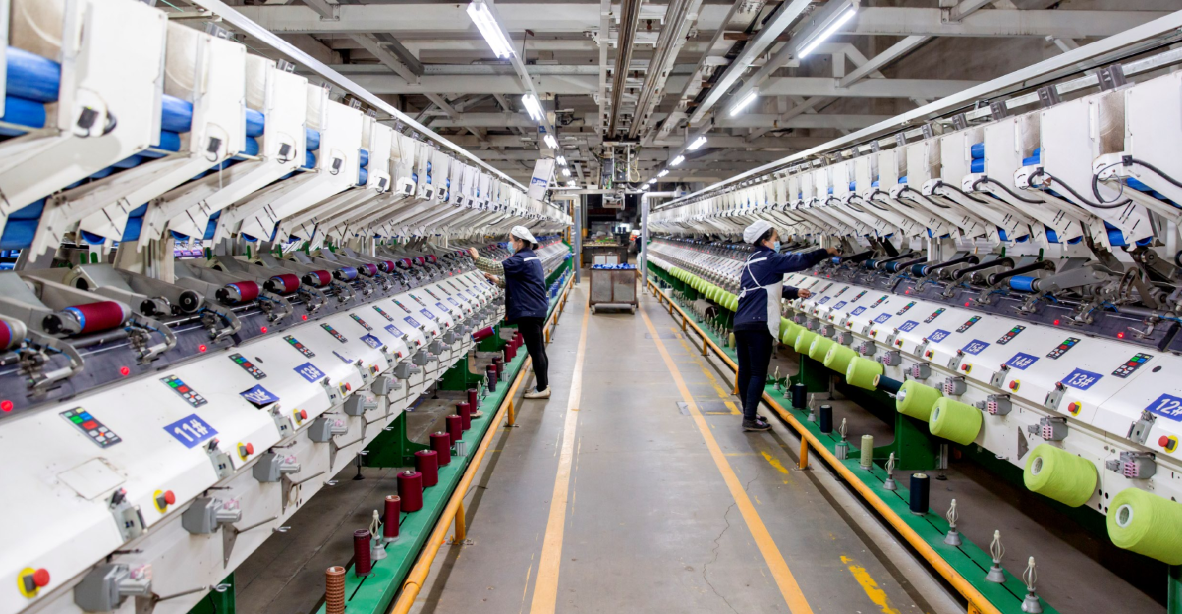
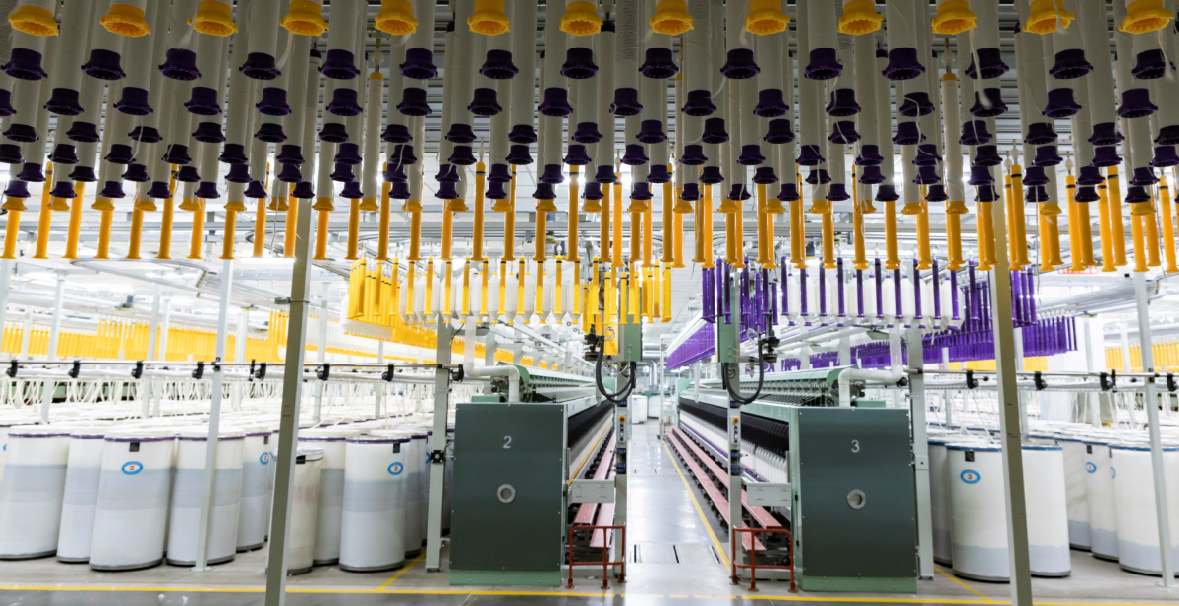
Jamesfabric operates as a subsidiary of Jiangsu Lianfa Textile Co., Ltd., a group founded in 1955 with a 1.12 km² manufacturing base and an annual output of 12,000 tons of yarn, 84 million meters of yarn-dyed fabric, 85 million meters of printed fabric, 78 million meters of home textile fabric, and 6 million shirts. Lianfa reports that it has ranked among China's top three yarn-dyed fabric producers for more than 10 years, and its 2025 turnover was USD 560 million. Jamesfabric itself focuses on woven ready-stock fabrics, holding about 4,000 online styles and ten million meters of stock in a 12,000 m² warehouse, with annual sales of RMB 350 million.
Ranking Overview: Five Programs, Five Different Wins
The ranking reflects strategic contribution to a shirt brand's core product portfolio, not sales volume or convenience. A program ranks higher when it shapes the brand's identifiable product and when its certification coverage is strongest for that use case. Each program can move up for a specific buyer: a brand entering home textiles may rank the home textile program higher, and an emerging label may rank ready-stock first.
| Rank | Program | Where it wins | Primary certification coverage |
|---|---|---|---|
| 1 | Yarn-Dyed Woven Fabric | Pattern depth and brand differentiation | GOTS (dyed fabrics, PC0025); Better Cotton CoC (dyed fabrics); OCS/GRS/RCS (dyed fabrics, dyed yarns); STeP (yarn-dyeing, weaving) |
| 2 | Piece-Dyed Woven Fabric | Solid-color consistency and repeatability | GOTS (dyed fabrics, PC0025); Better Cotton CoC (dyed fabrics); STeP (weaving, finishing) |
| 3 | Ready-Stock Woven Fabric | Speed, no MOQ, replenishment | STeP (weaving); GOTS/OCS/GRS/RCS scope includes trading and warehousing |
| 4 | Printed Woven Fabric | Seasonal print storytelling | GOTS (printed fabrics, PC0039); OCS/GRS/RCS (printed fabrics, PC0039); STeP (printing) |
| 5 | Home Textile Fabric | Category extension | STeP (weaving, printing, finishing); GOTS (dyed and printed fabrics) |
Detailed Solution: The Five Programs Ranked
#1 Yarn-Dyed Woven Fabric Program
Where it wins: brand identity through pattern. Yarn-dyed fabric is woven from yarns that are dyed before weaving. The pattern — gingham, stripe, chambray, dobby, jacquard — is built into the cloth rather than printed on top. Color runs through both sides, and the fabric typically holds its appearance through repeated washing. For a shirt brand that wants a recognizable signature, this is the program with the deepest design vocabulary.
The program covers yarn-dyed shirting fabric, dobby and jacquard fabric, gingham and stripe fabric, and chambray, with yarn counts from 10s to 200s and fabric weights from 60 to 300 g/m². The range spans lightweight dress shirting to heavier casual weights, so a brand can build a coordinated collection without splitting the order across multiple suppliers.
Certification backing: GOTS scope certificate CU805953GOTS-2026-00089439 covers dyed fabrics under product category PC0025, valid until 2027-09-01. Better Cotton Chain of Custody certificate ITS-BC-00002500 covers dyed fabrics, valid until 2028-07-01. The OCS/GRS/RCS scope certificate CU805953MUL-2026-00089440 covers dyed fabrics (PC0025) and dyed yarns (PC0029), valid until 2027-09-01. OEKO-TEX STeP certificate 18001268 covers yarn-dyeing and weaving, valid until 2028-03-31.
Best for: premium and casual shirt ranges where pattern is a brand asset; brands that want color depth and a woven-in look rather than a surface print.
Boundary: yarn-dyed development typically requires a made-to-order commitment. The made-to-order MOQ is 2,000 yards per colorway, so this program is less suitable for a first sample run or a small capsule launch unless the brand uses ready-stock options for validation first.
#2 Piece-Dyed Woven Fabric Program
Where it wins: reliable solid color at scale. Piece-dyed fabric is woven first and dyed afterward. The result is a clean, uniform solid color across the full width. For business shirts, corporate uniforms, and core solid-color ranges, this is the workhorse program. Color matching is more straightforward than with yarn-dyed patterns, and repeat orders are easier to control when the shade is set on a solid ground.
The program covers solid-color poplin, oxford, twill, and sateen, with yarn counts from 10s to 200s and weights from 60 to 300 g/m². Poplin and oxford support business and casual shirting; twill and sateen add structure for dress shirts and uniform programs. Lianfa's annual yarn-dyed capacity is 84 million meters, and the same dyeing and finishing infrastructure supports piece-dyed production.
Certification backing: GOTS scope certificate CU805953GOTS-2026-00089439 covers dyed fabrics (PC0025), valid until 2027-09-01. Better Cotton Chain of Custody certificate ITS-BC-00002500 covers dyed fabrics, valid until 2028-07-01. OEKO-TEX STeP certificate 18001268 covers weaving and finishing, valid until 2028-03-31.
Best for: business shirts, corporate uniforms, workwear, and core solid-color programs where consistency across repeat orders matters more than pattern variety.
Boundary: piece dyeing is efficient for solids but does not deliver the woven-in pattern depth of yarn-dyed fabric. A brand that needs checks, stripes, or jacquard effects should use the yarn-dyed program instead.
#3 Ready-Stock Woven Fabric Program
Where it wins: speed and order flexibility. Ready-stock fabric is already woven, dyed, and finished, and held in inventory. Jamesfabric keeps about 4,000 online ready-stock styles and ten million meters of fabric in a 12,000 m² warehouse year-round. The program covers ready-stock shirting fabric, dobby, flannel, and jacquard spot fabrics. The commercial difference is the order terms: ready-stock fabric has no MOQ and can be ordered from 1 meter.
That combination changes what a shirt brand can do. A new label can test five colorways without committing to 2,000 yards each. A brand that underestimated demand can replenish in days rather than wait for a production slot. A sourcing team can pull samples from stock instead of opening a development round.
Certification backing: OEKO-TEX STeP certificate 18001268 covers weaving, valid until 2028-03-31. The GOTS, OCS, GRS, and RCS scope certificate CU805953MUL-2026-00089440 includes trading and warehousing of non-final products in its process scope, which supports the stock-holding model.
Best for: emerging brands, capsule collections, sample validation, replenishment orders, and urgent production where waiting for made-to-order fabric would delay a launch.
Boundary: ready-stock availability depends on what is in the warehouse. A specific shade or construction may not be in stock at the moment of inquiry. For a fully custom color or pattern, the made-to-order route applies.
#4 Printed Woven Fabric Program
Where it wins: seasonal storytelling. Printed fabric applies a design to a woven base after weaving. For shirt brands that build collections around seasonal prints — florals, geometrics, conversational prints — this program offers design flexibility that yarn-dyed and piece-dyed programs do not. A print can be refreshed each season without changing the base cloth.
The program covers printed shirting fabric, printed flannel, and printed home textile fabric, with yarn counts from 10s to 200s and weights from 60 to 300 g/m². Lianfa's annual printed fabric capacity is 85 million meters, which indicates the scale available for seasonal programs.
Certification backing: GOTS scope certificate CU805953GOTS-2026-00089439 covers printed fabrics under product category PC0039, valid until 2027-09-01. The OCS/GRS/RCS scope certificate CU805953MUL-2026-00089440 covers printed fabrics (PC0039), valid until 2027-09-01. OEKO-TEX STeP certificate 18001268 covers printing, valid until 2028-03-31.
Best for: fashion-forward shirt collections, seasonal capsules, and brands that use print as a primary design language.
Boundary: prints are seasonal by nature. A print that sells well may not repeat in the same form next season, and the development cycle for a new print is longer than pulling a solid from stock. Brands that need year-round continuity should anchor the range with yarn-dyed or piece-dyed programs and use print as a seasonal layer.
#5 Home Textile Fabric Program
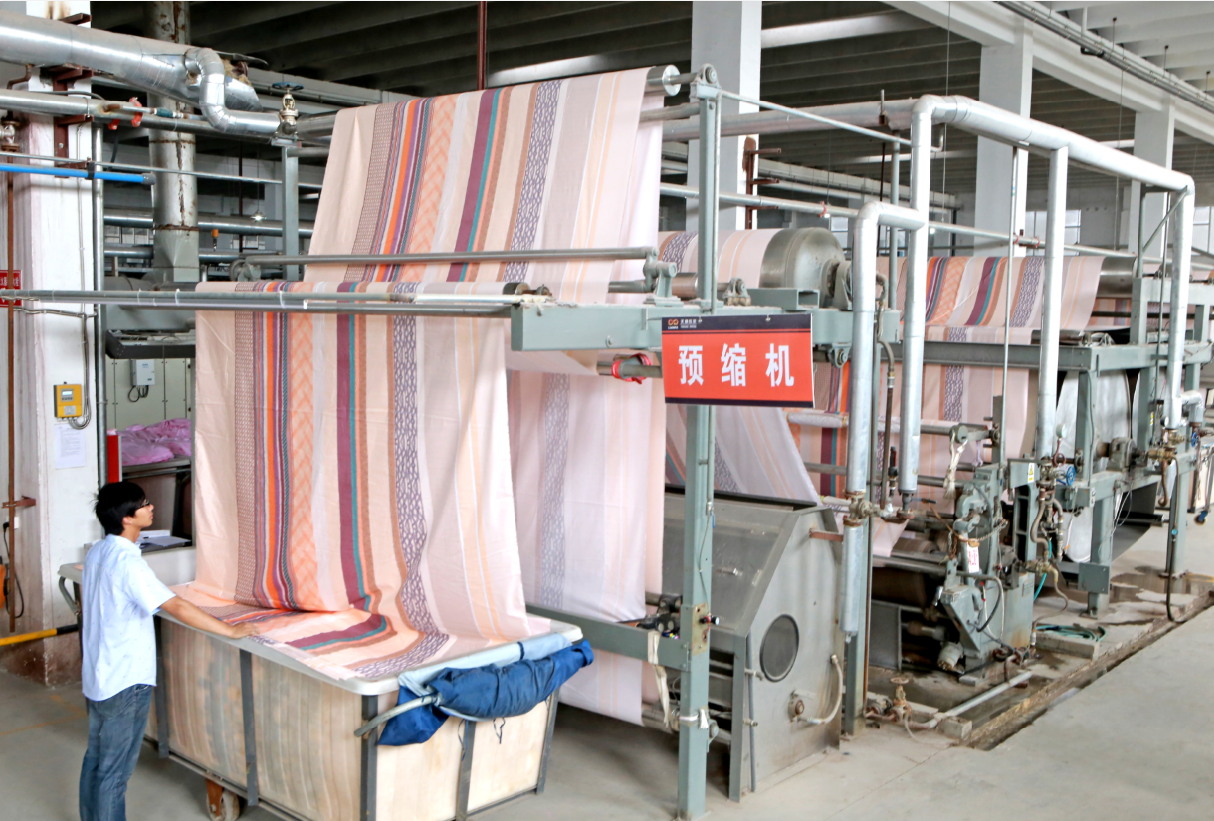
Where it wins: category extension from the same supply chain. Home textile fabric is a natural adjacency for a shirt brand that wants to extend into bedding, curtains, or home décor. The program covers bedding fabric, curtain and home décor fabric, and flannel fabric, with yarn counts from 10s to 200s and weights from 60 to 300 g/m². Lianfa's annual home textile fabric capacity is 78 million meters.
The strategic value is not that every shirt brand should enter home textiles. It is that a brand already sourcing shirting from Lianfa can extend into home categories without building a second supply relationship. The same fiber, dyeing, and finishing infrastructure applies.
Certification backing: OEKO-TEX STeP certificate 18001268 covers weaving, printing, and finishing, valid until 2028-03-31. GOTS scope certificate CU805953GOTS-2026-00089439 covers dyed and printed fabrics, valid until 2027-09-01, which supports home textile fabrics that use those dyeing routes.
Best for: lifestyle brands, brand-extension programs, and buyers who want coordinated fabric sourcing across apparel and home categories.
Boundary: home textile fabric is not a core shirt program. It ranks fifth because its primary use case sits outside shirt production. A brand that only makes shirts will find little direct value in this program, while a brand with a home line may rank it higher.
Step-by-Step Breakdown: Using the Ranking in a Sourcing Decision
- Map the collection to a program. Identify whether the season is driven by pattern (yarn-dyed), solid color (piece-dyed), print (printed), speed (ready-stock), or category extension (home textile). Most collections use more than one program.
- Check the order size against the MOQ. Ready-stock fabric has no MOQ. Made-to-order fabric starts at 2,000 yards per colorway. Made-to-order shirts start at 1,500 pieces per colorway. Match the program to the volume the brand can commit.
- Match the certification to the market. If the target market requires GOTS or Better Cotton documentation, confirm that the program's product category is covered. GOTS covers dyed fabrics (PC0025) and printed fabrics (PC0039). Better Cotton CoC covers dyed fabrics. STeP covers weaving, yarn-dyeing, printing, and finishing — the four process stages that underpin the six product lines.
- Use ready-stock to validate before committing. A brand can order from 1 meter to test hand feel, color, and shrinkage before opening a 2,000-yard made-to-order colorway.
- Consolidate where possible. Lianfa's vertical chain covers spinning, weaving, dyeing, printing, finishing, and garment production. A brand can source fabric and finished shirts from the same group, which reduces the number of supplier relationships to manage.
Use Cases: Matching Programs to Real Sourcing Situations
Premium dress shirt launch. A brand developing a high-count poplin dress shirt uses the piece-dyed program for solid white and blue, with GOTS coverage for dyed fabrics. If the brand wants a dobby texture, it adds the yarn-dyed program. The made-to-order MOQ of 2,000 yards per colorway sets the minimum commitment.
Corporate uniform program. A uniform supplier needs repeatable navy and white across multiple years. Piece-dyed poplin and twill provide the consistency. The Better Cotton CoC and GOTS certificates support the compliance file. The supplier can also source finished shirts from the same group at 1,500 pieces per colorway.
Emerging brand test run. A new label wants to test five shirt styles without committing to large colorway volumes. Ready-stock fabric allows orders from 1 meter, so the brand can produce a small run, test the market, and then move to made-to-order for the best sellers.
Seasonal print capsule. A fashion brand builds a summer capsule around floral and geometric prints. The printed program provides the seasonal design flexibility, with GOTS coverage for printed fabrics (PC0039) and OCS/GRS/RCS coverage for the same category.
Lifestyle brand extension. A shirt brand adds a home line. The home textile program provides bedding and décor fabric from the same supply chain, with STeP coverage for weaving, printing, and finishing.
Comparison Table: Five Programs Side by Side
| Program | Rank | Core products | Yarn count | Fabric weight | MOQ | Certification coverage | Best use case |
|---|---|---|---|---|---|---|---|
| Yarn-Dyed Woven Fabric | 1 | Shirting, dobby, jacquard, gingham, stripe, chambray | 10s–200s | 60–300 g/m² | 2,000 yd/colorway (made-to-order) | GOTS (PC0025); Better Cotton CoC; OCS/GRS/RCS; STeP | Pattern-led premium and casual ranges |
| Piece-Dyed Woven Fabric | 2 | Solid poplin, oxford, twill, sateen | 10s–200s | 60–300 g/m² | 2,000 yd/colorway (made-to-order) | GOTS (PC0025); Better Cotton CoC; STeP | Business shirts, uniforms, core solids |
| Ready-Stock Woven Fabric | 3 | Shirting, dobby, flannel, jacquard spot fabrics | Stock-dependent | Stock-dependent | No MOQ, from 1 m | STeP; GOTS/OCS/GRS/RCS trading and warehousing scope | Speed, sampling, replenishment |
| Printed Woven Fabric | 4 | Printed shirting, printed flannel, printed home textile | 10s–200s | 60–300 g/m² | 2,000 yd/colorway (made-to-order) | GOTS (PC0039); OCS/GRS/RCS (PC0039); STeP | Seasonal print collections |
| Home Textile Fabric | 5 | Bedding, curtain, home décor, flannel | 10s–200s | 60–300 g/m² | 2,000 yd/colorway (made-to-order) | STeP; GOTS (dyed and printed) | Category extension |
FAQ
Which certifications should a shirt brand verify when comparing woven fabric programs?
Three certificates are relevant across the five programs. GOTS scope certificate CU805953GOTS-2026-00089439, issued by Control Union Certifications B.V. and valid until 2027-09-01, covers dyed fabrics (PC0025) and printed fabrics (PC0039). Better Cotton Chain of Custody certificate ITS-BC-00002500, issued by Intertek and valid until 2028-07-01, covers dyed fabrics. OEKO-TEX STeP certificate 18001268, issued by OEKO-TEX Service GmbH and valid until 2028-03-31, covers weaving, yarn-dyeing, printing, and finishing. The OCS/GRS/RCS scope certificate CU805953MUL-2026-00089440 covers printed, undyed, and dyed fabrics plus dyed yarns. Buyers should confirm that the program they select falls within the certificate's product category and process scope.
Can one supplier provide both woven fabric and finished shirts?
Yes. Lianfa Group's vertically integrated chain covers cotton spinning, yarn-dyed fabric, printed fabric, garment production, and home textiles. Annual capacity includes 84 million meters of yarn-dyed fabric, 85 million meters of printed fabric, 78 million meters of home textile fabric, and 6 million shirts. A brand can source fabric and finished shirts from the same group rather than managing separate fabric and garment suppliers.
What are the MOQs across the five programs?
Ready-stock fabric has no MOQ and can be ordered from 1 meter. Made-to-order fabric starts at 2,000 yards per colorway. Made-to-order shirts start at 1,500 pieces per colorway. The MOQ structure means a brand can use ready-stock for sampling and small runs, then move to made-to-order for bulk production.
Can buyers sample before committing to bulk?
Yes. Ready-stock fabric can be ordered from 1 meter, which supports sampling and small-batch validation. A buyer can test hand feel, color, and shrinkage on a stock item before opening a made-to-order colorway at 2,000 yards. This sampling path reduces the risk of committing to a large volume before the fabric has been validated in production.
How fast can ready-stock fabric ship?
Jamesfabric holds about 4,000 ready-stock styles and ten million meters of fabric in a 12,000 m² warehouse year-round. Ready-stock orders ship ex-stock without production waiting time. Made-to-order lead time is confirmed at the time of order. To discuss a specific program or request a sample, contact Ruth at ruth@lianfa.cn or +86 13862719060.
Conclusion
The five programs are not interchangeable, and that is the point. Yarn-dyed wins on pattern depth. Piece-dyed wins on solid-color consistency. Ready-stock wins on speed and order flexibility. Printed wins on seasonal storytelling. Home textile wins on category extension.
For a shirt brand, the practical decision is to map each collection to the program that fits its design intent, order size, and compliance requirement. Certification coverage should be checked against the specific product category, not assumed from a general supplier claim. The GOTS, Better Cotton, and OEKO-TEX STeP certificates listed in this guide provide a starting point for that check.
Jamesfabric's role in this portfolio is the woven fabric and ready-stock layer, backed by Lianfa Group's vertical chain from spinning to garment. A brand that wants to consolidate fabric and shirt sourcing can use the five programs as a single-supplier framework, with the ranking above as a guide to where each program fits.
Next Step: Evaluate the Programs Against Your Collection
Request the company profile or a sample set to test hand feel, color, and certification coverage before committing to a program.
Have Questions or Need More Details?
Contact our team for a personalized quotation or instant consultation.
Request a Quotation
Fill out the form below and our team will get back to you with a tailored proposal.
WhatsApp Direct Chat
Prefer to chat in real-time? Message us on WhatsApp for instant assistance & quick answers.
- Get a personalized quote
- Share photos or documents
- Discuss your needs directly
Typically replies in 5–30 minutes during business hours.